
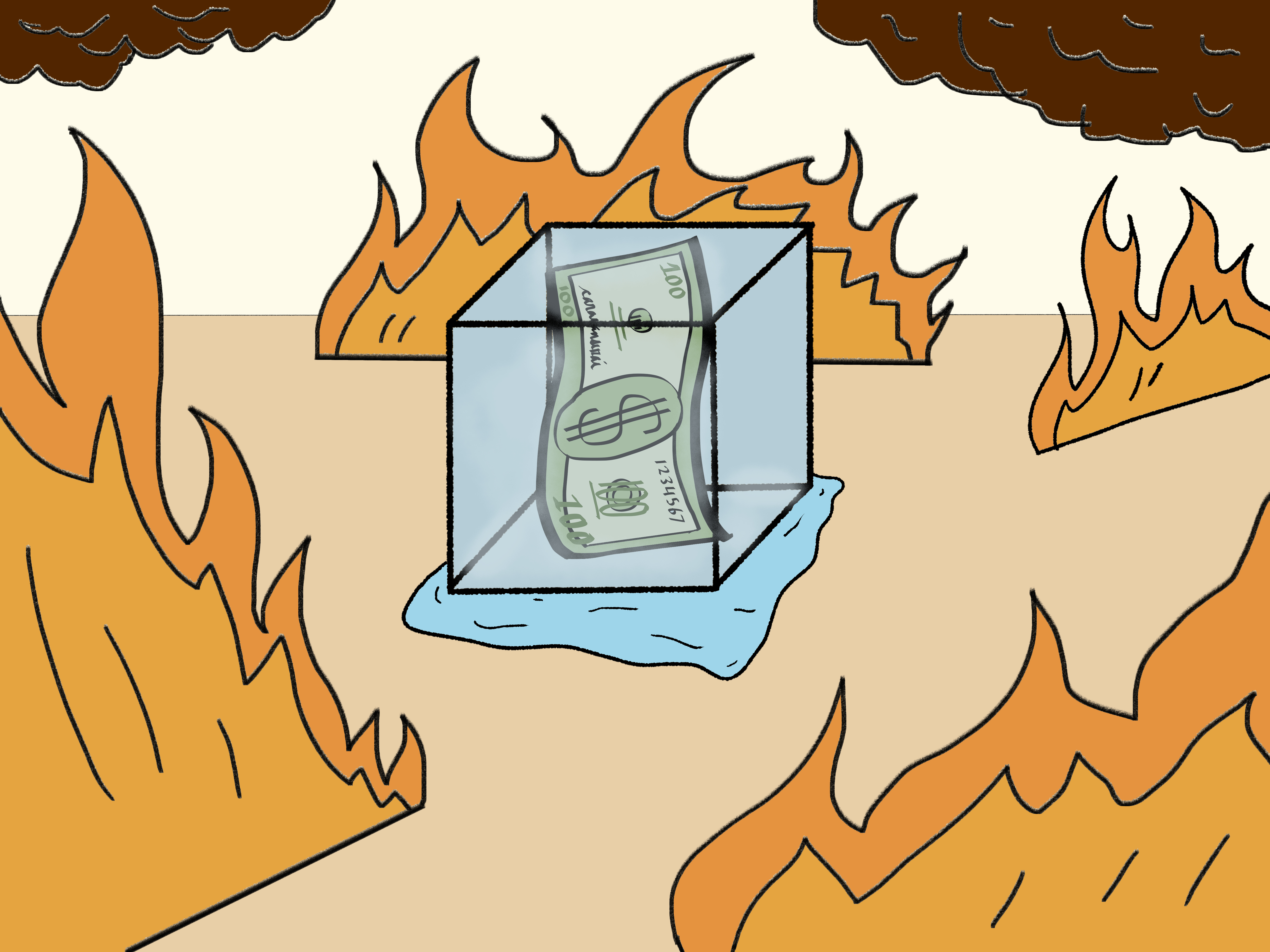
More sacrifices to please the gods.
What climate adaptation solutions are feasible without the Global North's financial support?

One fine future day, direct air capture, afforestation, and carbon mineralization may be so effective that we barely remember what it was like to live on a planet suffused by atmospheric carbon concentrations above 400 parts per million.
We’re not feeling too optimistic, though.
Which means that the contest between humanity and climate change boils down to adaptation: how, how fast, and how we stop people from getting left behind. In the Global South, far more exposed by geography and poverty to the effects of climate change than the Global North, adaptation is an imperative rather than an option. Parts of the adaptation agenda can be integrated into the process of development. Cities can integrate stormwater management systems and passive cooling techniques into their planning; rising prosperity can bring workers out of the fields and into air conditioning. Other decisions are not so easy. If a place is uninsurable, should the government step in, or should communities relocate? When rice paddy can no longer be cultivated, can farmers live off sorghum and millet?
For years, the countries of the Global North whispered to their Southern counterparts that they would offer both counsel and cash to resolve these questions. Occasionally they even said the quiet part out loud: Sorry for setting you up for these problems, we’ll give you a hand. Today, nary a whisper can be heard. The United States does not believe in adaptation. The rest of the developed world is being suffocated by faltering economic growth, the strangler fig of American dysfunction, and the pressures of paying for wars unasked for. Aid budgets across the OECD, more broadly, are being sharply scaled back. And so we find ourselves asking: What climate adaptation solutions are feasible without the Global North’s financial support?
Returning from the dawn of the international era, Woodrow’s Wraith argues that the answer to (capital) drought within developing countries is themselves: They can access capital markets more easily working together than they could alone. Lewis Rot calls for a move away from foreign capital toward deploying abundant local labor toward time-tested engineering projects to resolve adaptation challenges. Finally, Comrade Dracula lays out a vision for embracing environmental stewardship that is optimized for decades, not Davos.
What climate adaptation solutions are feasible without the Global North’s financial support?
I. Woodrow’s Wraith
While developing countries can adapt to climate change without international assistance, their success depends on fiscal capacity and capital market access. Bangladesh, among the world’s most climate-vulnerable countries, has financed the $300 million Bangladesh Climate Change Trust Fund through budgetary allocations. But this is a drop in the bucket compared to the $8.5 billion annually that Bangladesh needs for adaptation finance alone.
The bigger bucks seem to be in accessing capital markets. Fiji, a small island nation, raised $100 million through a sovereign green bond—compared to estimated annual needs of $123 million for natural disaster management—and committed 90 percent toward climate adaptation efforts. Other countries have managed to raise much more: Indonesia’s green sukuk was subscribed at $1.25 billion, with the proceeds earmarked for disaster risk management. India’s sovereign green bond raised $2 billion and included a climate adaptation component.
The problem is that historic debt burdens curtail market access for around 95 out of 108 emerging and developing economies. For countries with limited fiscal capacity that can’t access capital markets, the emergence of donors from outside the Global North offers some hope. But climate adaptation seems to be a low priority. For example, although China provided $44.92 billion in climate finance between 2013 and 2022, none of it was earmarked for adaptation.
A better way to overcome the challenges of low fiscal capacity and lack of access to capital markets is South-South multilateral cooperation. Countries like Bangladesh, Fiji, and Indonesia have found partial solutions—domestic budget allocations, sovereign green bonds, green sukuk—but each runs up against the same ceiling: limited scale, debt burdens, and the high cost of capital.
To solve these problems, countries in the Global South are turning to multilateral cooperation to mobilize adaptation finance. In 2022, Pakistan demonstrated how climate shocks can create balance of payments pressures. The V20, an intergovernmental group of climate-vulnerable countries, is now launching the Lifeline Fund to offer liquidity support that can ease such pressures through rapid currency swap arrangements. The fund is partially financed by member countries’ central bank reserves. South-South multi-sovereign wealth funds and multilateral guarantee platforms can also provide long-term financing in local currency, reducing foreign exchange risk.
And while countries in the Global South are all exposed to financial and climate risks, they do not experience the same climate shocks at the same time or magnitude. Shocks are regionally correlated. Multi-regional financial facilities can mitigate their effects through risk-sharing agreements, like the exposure exchange agreement signed by the African Development Bank and the Inter-American Development Bank in 2025. These work even when participating countries are fiscally weak. The New Development Bank, for example, has a better credit rating than most of its member states. This not only lowers borrowing costs for the NDB, but it also allows the NDB to pass that advantage along to member states through guarantees. Last year, the NDB created a new guarantee platform to do just this. The future of climate adaptation in developing countries travels from South to South.
***
II. Lewis Rot
Over $300 billion a year―that is UNEP’s most recent price tag for the cost of climate adaptation needed by 2035 in developing countries. By contrast, this same UNEP report found that financial flows from the Global North into these countries stood at only $26 billion in 2023—$2 billion lower than 2022.1
Given that their benefits are hard to monetize, adaptation projects in the Global South are often reliant on concessional finance and charity from the Global North. Much has been said about how the private sector should step in to fill this gap, and how innovative public financing solutions could “crowd in” this elusive private capital. But the reality is that this novelty check from the North is unlikely to be cashed in anytime soon. The grim yet—in my opinion—unexpectedly hopeful reality is that Global South adaptation strategies will have to decouple from this paradigm of piling on foreign debt to import capital goods if they are to be deployable in the near-term and effective over the long haul.
Nature-based solutions, especially the strategic integration of green into gray infrastructure, are among the most feasible paths forward. Traditional “gray” infrastructure, such as dams and seawalls, is known for its complexity and capital intensity. Because they require high upfront investment and specialized technical capacity to develop, such projects are often easier to justify when tied to direct economic gains—such as electricity generation or water supply—than when built for adaptation’s sake alone. Given that their benefits are hard to monetize, adaptation projects in the Global South are often reliant on concessional finance and charity from the Global North. By contrast, a cheaper and more feasible solution would be to embed natural systems, or “green” infrastructure, into existing structures—which could drastically enhance their resilience, extend their lifespans, and avert future maintenance and repair costs as climate extremes intensify.
A prime example of this approach is the Itaipu Dam’s “Forest Curtain” of reforestation and restoration efforts in Brazil. This riparian wall, now more than 44 million trees strong, could be saving the project over $80 million in lost revenue per year by stabilizing the Paranà River’s banks, trapping soil that would have otherwise clogged the turbines and preventing sedimentation that would have reduced the dam’s reservoir storage capacity. And although the project is self-funded by Itaipu, it exemplifies how a nature-based maintenance strategy can cost-effectively protect a multibillion-dollar energy asset while boosting its operational profile and enhancing its long-term resilience―all without international aid.2
Honorable mentions that similarly embody this “green in gray” ethos are decentralized urban efforts and rural adaptive farming initiatives. In Colombia, Medellin’s “Green Corridors” transformed the city’s roadways into a network of botanical corridors that successfully reduced the city’s average temperature by 2°C without any mechanical cooling. And in the flood-prone Brazilian Amazon, communities are reviving Matupás “floating gardens” made of native bamboo and aquatic plants that move with the fluctuating water line to bolster food security and local resilience. These and other nature-based models are (quite literally) living proof that effective resilience can rely on local resources and ecological capital instead of foreign currency.
While the Global North still ultimately holds a climate debt to the Global South, the latter cannot afford to wait for payment. By focusing on solutions that are labor- rather than capital-intensive and environmental rather than mechanical—like planting trees along a river bank—developing nations can capitalize on their local endowments and know-how, thus seizing a resilient future that’s wholly owned by them rather than by their northern creditors.
***
III. Comrade Dracula
To borrow a phrase from a sage, developing countries should “tend their own gardens.” In the case of climate change, I mean that quite literally. Climate change will have different effects in different places―especially as global warming transforms ocean currents, wind patterns, rainfall, and temperature zones in complex and interconnected ways.
Bangladesh is a low-lying delta country; it will face rising sea levels and flooding. Nepal, high in the mountains, will face glacial retreat and changes in monsoon patterns. Their problems are not the same, and their solutions will not be the same either. Adaptation must begin locally.
Still, some broad patterns are visible. In many regions, the climate itself seems to be migrating. Conditions typical of southern latitudes are slowly moving northward. In the United States, for example, animals such as opossums, armadillos, and even alligators have expanded their ranges north in recent decades. Plants will follow.
Human societies have adapted to such shifts before. Near the end of the last Ice Age, about 15,000 years ago, much of northern France was still covered in ice. Hunters from the south followed animals northward as the glaciers retreated. Along the way, they also planted or discarded hazelnuts. Over the following millennia, as the climate warmed, those nuts grew into dense hazel bushes that provided food for later generations. Around 6,000 years ago, during the warming period known as the Holocene Hypsithermal, farmers in southern Mesopotamia developed canal irrigation systems to stabilize crops in hotter, drier climates. In East and Southeast Asia, their counterparts developed terraced agriculture to conserve water and soil.
The lesson is that communities can prepare for gradual climate shifts by shaping their landscapes for the conditions that are likely to emerge.
Forward-thinking agriculture, crop diversification, small-scale irrigation, terracing―these methods lack the glamor of billion-dollar climate summits, but they tend to work, which is an underrated quality in public policy.
The most important step of all, however, is cultivating a basic sense of environmental stewardship in individuals and communities. The Ganges is not polluted because of Western industry. It is polluted because local people put garbage in it.
A cautionary tale from history: The classical Maya faced a subsistence crisis because their societies depended too heavily on corn grown in fragile tropical soils. They could have diversified their agriculture or adopted more sustainable farming systems used elsewhere in Mesoamerica. But corn was so central to their culture and religion that they doubled down on it. When food shortages worsened, Mayan city-states began fighting each other for grain. Their civilization eventually collapsed.
One can almost imagine the arguments. Some Mayan lords point fingers, blaming each other, and proposing far-fetched solutions. (“More pyramids, more sacrifices to please the gods!” Maybe even, “Cloned meat! Insect protein! Let’s inject sulfur particles into the stratosphere to reflect sunlight!”). Other Mayan lords insist that everything’s fine, that nothing is wrong. Neither side is tending to their shared garden.
Developing countries cannot control global carbon emissions. But they can strengthen their landscapes, diversify their agriculture, and cultivate responsibility towards the environment. In the long run, tending one’s own garden may be the most practical climate policy available.
Our next issue will be published on May 27.
If you have thoughts, please respond below or send us a letter to the editor at caravanserai.forum [at] gmail [dot] com.
This figure comes from UNEP’s 2025 report, so I find it odd that it’s still so outdated. Nonetheless, it serves as the most accessible shorthand figure available. Climate Policy Initiative suggests $46 billion as an alternative figure.
Itaipu has not published a specific cost figure for the Forest Curtain project. While some high volume projects can cost as little as 10 to 20 cents per tree, assuming the classic $1-per-tree as a lower bound and a $10-per-tree as an upper bound yields a total project cost around $240 million. Under the conservative assumption, the project pays for itself in under 4 years when only taking avoided revenue losses into account. The alternative (constant dredging) would be a recurring cost ranging in the millions of dollars.