
To make it democratic, accountability is crucial.
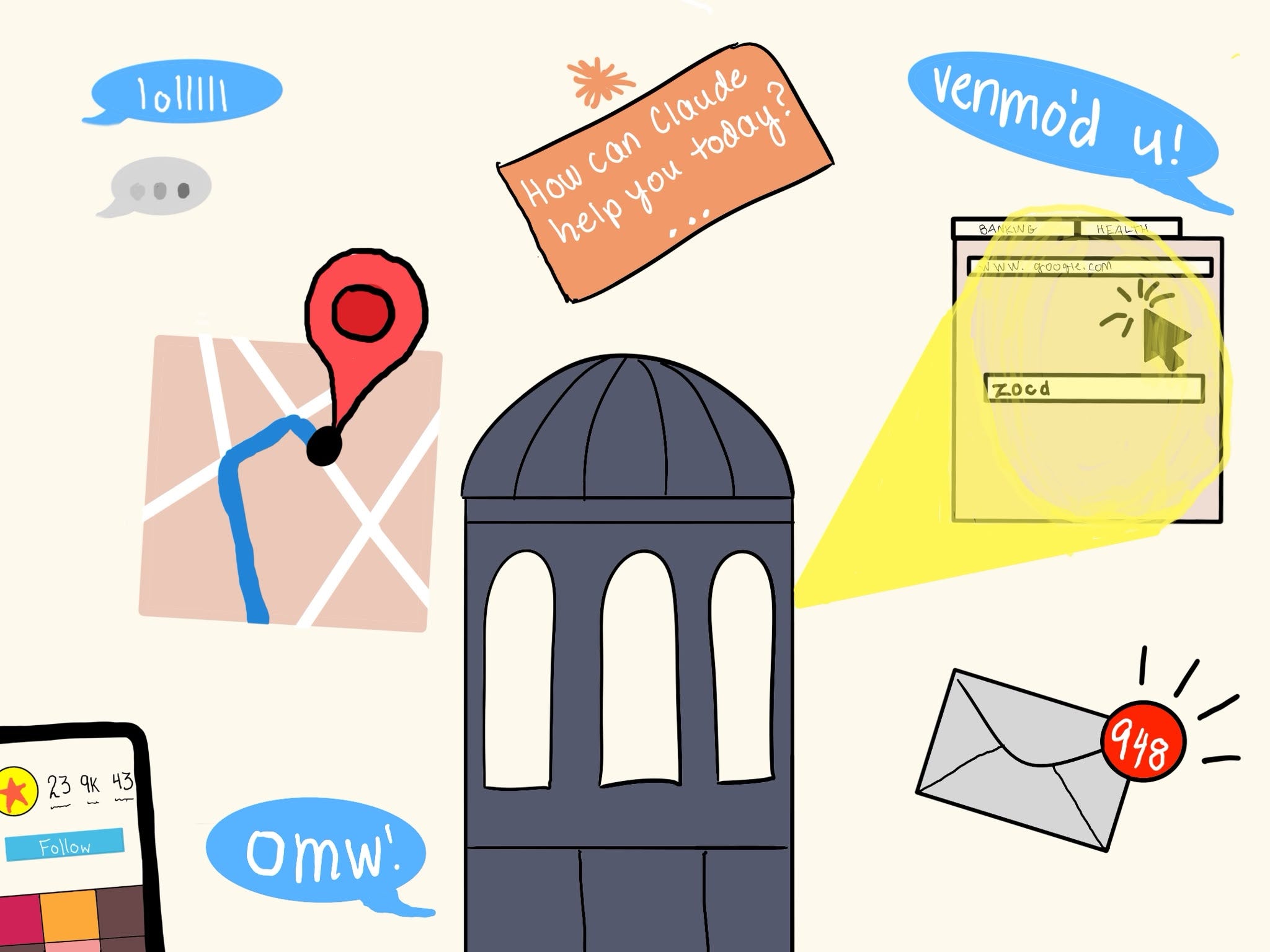
What kinds of data should the government have about its citizens, and how should it be allowed to use it?

There are myriad ways to view the relationship between subjects, society, and the state. At Caravanserai, we prefer to think of subjects as citizens: members of an institutionalized society, both state and nation, who are endowed with certain rights and, in turn, promise to carry out certain obligations. As the give-and-take contained in this description suggests, there is no free lunch for the citizens of a republic: The state is constituted by us and exists for us. But in constituting the state, we citizens sacrifice parts of both our freedoms and our identities―and our incomes, through taxes―in order to assume freedoms, identities, and ways of living that are more than the sum of our sacrifices.
It is not always clear what should be given up to the public and polis, and what should remain integral to the citizens. And, in our world, perhaps no conversation along these lines is more fraught than the question of how much citizens should allow themselves to be known by their government—through everything from taxes and deeds to phone taps and web trackers—and how much self-knowledge should remain just that: the property of the self, not of society. The benefits to the state and society—and therefore, to the individual—of granular, pervasive data collection are undeniable: With better data, the state can fulfill its role as a provider and a protector with greater efficiency and often with higher quality of service. But the dangers are nearly as obvious; a government is only as good as the humans who carry out its functions, and they have many incentives to turn knowledge into (the abuse of) power.
Today, our writers grapple with this question: What kinds of data should the government have about its citizens, and how should it be allowed to use it? Emile89 argues that even as data collection progresses in depth and granularity, the dictates of democratic accountability mean it should not be allowed to create algorithms that replace the key parts of human governance. Data Watch Dog draws from recent U.S. legal history to make the case that curbs on the state’s ability to know its citizens are necessary and not just a function of what the state can do but what the state can purchase. And Crabavaggio concludes with a heuristic that, while functioning governments require public data, private preferences should not be property of the state.
What kinds of data should the government have about its citizens, and how should it be allowed to use it?
I. Emile89
Ours is a society run on data. To make sense of it, we must be able to answer two questions: What rights and obligations do states, corporations, and individuals have when it comes to the use of algorithmic processes? And where should the limits of algorithmic governance lie? General principles must be elaborated that guard against the dangers of algorithmic decision-making while enabling our governors to take advantage of their capabilities.
Before we learn when algorithms are making decisions that affect us, we must collectively wrestle with when algorithms should be used in the first place. Algorithms have been used by businesses and government agencies for decades to make decisions. What is new today is that algorithms are increasingly uninterpretable. In particular, generative AI lacks the characteristics that make transparency and accountability possible. Clear elucidation of its “thought processes” continues to elude even the most advanced researchers.
Inscrutable layers of process mean a greater emphasis on outcomes or “impact” in the evaluation of algorithms. Outcomes can certainly be measured to assess fairness, efficiency, and so forth, and may be valid grounds for determining when algorithms are used. But two stark problems immediately present themselves even if situations that involve algorithmic governance yield outcomes deemed fair and efficient.
First, ever-more sophisticated algorithms need ever-more granular datasets. Those necessitate invasions in privacy that may outweigh the benefits delivered by algorithmic decisions. Maintaining the inviolability of certain aspects of life, even if data about those aspects of life would provide algorithms with insightful solutions to our problems, may be worth it. Capable algorithms may encourage a ceding of decision-making responsibilities that threatens the long-term viability of democracy.
Second, increased use of algorithms risks deepening the credibility crisis that is a persistent feature of bureaucratic governance. While some implementation of AI is inevitable and desirable, algorithms adopted before the societies they govern have learned to understand and accept them may exacerbate the ways in which confusion over the character of bureaucracy plays into the hands of populist critiques of the “deep state.” The tradeoff of legitimacy for efficiency is a fine one, and the 23 million people employed by federal, state, and local governments whose jobs could be eliminated by the expanded use of algorithms may constitute a reserve of commitment and participatory instinct that modern democracy requires (much as de Tocqueville theorized).
Above all, the legibility of process to human beings matters for the legitimacy of any democratic government program. The fact that experimentation is core to the modern democratic experience is hard to reconcile with the push to extensively employ algorithms. Experimentation always involves vicissitudes and dynamic change—to make it democratic, accountability is crucial. This is why we haul bureaucrats before Congressional committees to explain their reasoning.
If algorithms remain uninterpretable, this core feature of accountability will wither in any future where they take on more of the responsibility of governance in a democracy. The process whereby decisions are explained is crucial to the legitimation of those decisions. A future where governance justifies itself based on outcomes should give us pause.
***
II. Data Watch Dog
From 1700s lantern laws to the technological feats of the National Security Agency, data collection and manipulation have been a persistent function of American government. In spite of judicial curbs on government data access, technological advancement has continuously created loopholes for government surveillance. A key example is the buying and selling of private data by government agencies. A more stringent juridical doctrine is necessary to curtail government overreach and the exploitation of individuals’ data.
A seminal Fourth Amendment Supreme Court case offers a starting point for making sense of data access in today’s world. In Katz v. United States (1967), sportsbetter Charles Katz was arrested after the FBI gleaned information from a listening device on a public phone booth. While Katz argued that the arrest constituted a wrongful search, the FBI claimed no “search” occurred and no warrant was needed because the listening device did not “physically penetrate the phone booth’s wall.” Writing for the majority, Justice Potter Stewart ruled against the FBI, stating that the Fourth Amendment protects “people, not places,” and expands to protect a person’s reasonable right to privacy.
This Constitutional exegesis countered the idea that there are some spaces that are Fourth Amendment-applicable and some that are not. In the 21st century, this focus on the person rather than the space is essential. It is almost impossible for individuals to participate in modern life without leaving traces of their presence across apps, websites, and browsers. Americans have simultaneously understood that they are being surveilled and decided that the panopticon cannot be fought, leading to societal surrender to monitoring. But the convergence of user and digital footprints should push us in the opposite direction: Rather than expecting privacy to shrink, we should ensure it can expand. Protecting “people, not places” should include a person’s digital silhouette.
This is where the Supreme Court can take a stand. The Court’s rulings on the Fourth Amendment in the digital age have left standing loopholes that still allow government surveillance of individuals. In Carpenter v. United States (2018), the Court required the government to obtain a warrant prior to receiving cell-site location information data, but did not preclude the government from purchasing such data from third parties. Furthermore, recent cases such as the Chatrie v. United States (2026) ruling, from just last month, restricted access to specific technological data but does not go far as to rule on the buying of data, users’ assumption of privacy, or the expansion of the “private space.”
As juridical doctrine attempts to address these gaps in privacy protections, lawmakers can work to enshrine violations of data privacy as violations of personal privacy and institute firm protections for people online. Bills such as the Fourth Amendment Is Not For Sale Act, which prevents law enforcement and intelligence agencies from purchasing internet and location data from data brokers, are a necessary step. But further down the road, we must confront a more existential question: In the digital age, where do the limits of the person end and those of the public begin?
***
III. Crabavaggio
Would you want your mayor to know when you leave home for work and when you reach? For your governor to know what your chronic diseases are? For the executive branch to keep track of every home you’ve lived in over the last decade? My guess is that your answers are varying degrees of “no,” for reasons ranging from being weirded out to serious concerns about being disappeared.
But I’m not sure that our instinct should be to say no to the government when it asks, or tries to obtain, these kinds of data. Information is the foundation of effective governance. In earlier eras, granular information about a state’s population and territory was difficult for its government to obtain and even more difficult to actually process, manipulate, and put into use. Sometimes states responded to this by relying on deliberative bodies to transmit localized information; other states began to construct advanced bureaucracies that could collect and make use of data. But all of these states were united by the need to rely on relatively brute-force methods for monetizing that information—counting windows for taxes, relying on customs for revenue. That meant they were not, by and large, actually that good at governing. It is hard to deliver welfare when you don’t know how many people there are in your country.
We live in a radically transformed world in which a paucity of data is (for the most part) no longer an issue, but the choices we make over how to collect, manipulate, and deploy it are. We should regard this sea change as a blessing rather than a curse. A government with access to plentiful citizen data is, in theory, one that can deliver public services efficiently, levy taxes fairly, and protect its citizens against threats effectively. The tradeoff, of course, is that allowing the government to know so much about us raises the risk of that knowledge being abused. And that is a very real risk: We have seen in this century alone that ominous specters, both domestic and foreign, can push governments to engage in acts of surveillance and monitoring that verge on and sometimes cross into the criminal.
So what I think we should be asking ourselves is not how we can stop the government from knowing so much about us. It is, rather, how we can allow the government to know so much about us that the traffic lights turn at the right time and our tax paperwork no longer requires filing and public benefits are delivered synchronously―without worrying that the government is also tracking every website we visit. And here I think the answer is to allow much more surveillance into our public-facing lives, even as we act to curb both the government and the private sector’s access to information about our private lives. Let there be speed cameras and crowd density trackers to manage traffic signals and public spaces; yes, let the government use data from my employers and financial institutions to send me an email each year telling me how much I owe it in taxes; let my demographics and the tax credits I receive be carefully tabulated and what I am owed delivered to me without my having to lift a finger. It would still be better to anonymize much of this data collection―but make it happen.
In my private life, however―the books I purchase, the websites I visit, the music I listen to—let that stay private. Knowing my intimate preferences is not necessary to govern me effectively. The government should know who I am as a citizen without bothering to understand what I am like as a person.
Our next issue will be published on July 22.
If you have thoughts, please respond below or send us a letter to the editor at caravanserai.forum [at] gmail [dot] com.